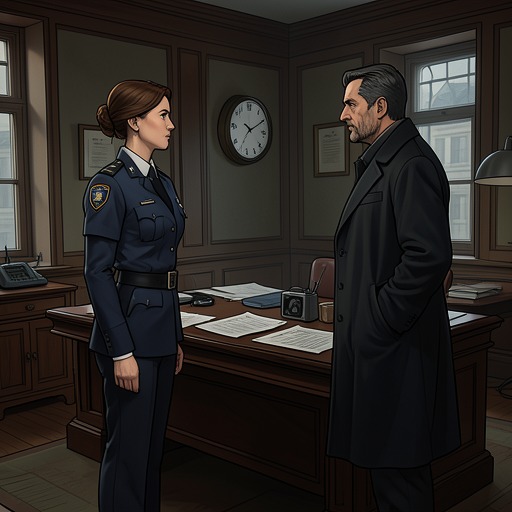
Andy Swift
Blow OutAndy Swift is a National Crime Agency behavioural psychologist whose advice helps Jo Stuart think through the ricin-pellet murders. He offers both a practical explanation for the clarity she feels after physical training and a behavioural framework for examining the killer’s method, motive, and possible use of an intermediary.## Identity and WorkAndy is identified as Jo’s behavioural psychologist at the National Crime Agency. Their conversations take place alongside her demanding investigation: he provides analysis rather than directing the police inquiry, and Jo remains responsible for deciding how his advice might inform it.## Advice on Stress and BehaviourAndy has previously explained to Jo that the post-training lift she experiences is not only connected to endorphins. He attributes some of the effect to the fight-or-flight response releasing BDNF, which he says protects mind and body from stress and leaves her clearer-headed and ready for action. Jo is less interested in the mechanism than in the benefit, but his explanation connects her physical training to her capacity to manage pressure.## Profiling the KillerWhen Jo meets Andy after a night of work, he notices how exhausted she looks. Their discussion turns to the case’s unusual modus operandi and the absence, so far, of a suspect. Andy says the method interests him because it lies at the heart of a behavioural profile, and asks which single motive Jo would infer from the way the killer dispatches victims. She answers immediately: revenge. His question gives her a way to distinguish the meaning suggested by the method from the still-unresolved question of who might have acted.Andy develops the possibility that the attack could involve two people: someone with a grievance who pays for the killing, and a hitman who carries it out. In that scenario, the person who commissioned the crime and the person who performed it would require different profiles. The grievance-holder’s profile would also differ because the killing had been carried out at arm’s length, through an intermediary. Jo understands the distinction and asks how soon Andy can provide a profile. He promises one that afternoon, while cautioning her not to place too much weight on it and expressing hope that it will help.## Relationship with JoAndy’s contribution is consultative and collaborative. He prompts Jo to articulate her own reading of the killer’s motive, then complicates it with an alternative structure for the crime. Jo responds with focused questions and appreciation for his assistance, while his caveat preserves the difference between a behavioural hypothesis and established evidence. Their exchange supplies analytical direction without resolving the investigation for her.